
How to Tell If Furniture Is Well-Made


Most of us have been there. You fall for a sofa in a big box store (maybe because it was a bargain), bring it home, and within a couple of years the cushions are sagging, the frame is creaking, and you're already dreading the whole process of replacing it. The frustrating part? It probably looked fine in the store. Maybe even great.
The problem isn't your taste. It's that the furniture industry has gotten very good at making average products look premium.
As we talked about in The Smart Homeowners Guide to Buying Furniture that Lasts for Decades, the real cost of cheap furniture isn't the sticker price: it's the replacement cycle. A $600 sofa you replace every six years costs more over time than a $2,800 one that you can reupholster and keep for thirty years (or more!).
Knowing that quality matters and knowing how to spot quality are two different things. This is the practical guide to bridging that gap, something you can actually use in a showroom or at home when you're reconsidering a piece you already own.
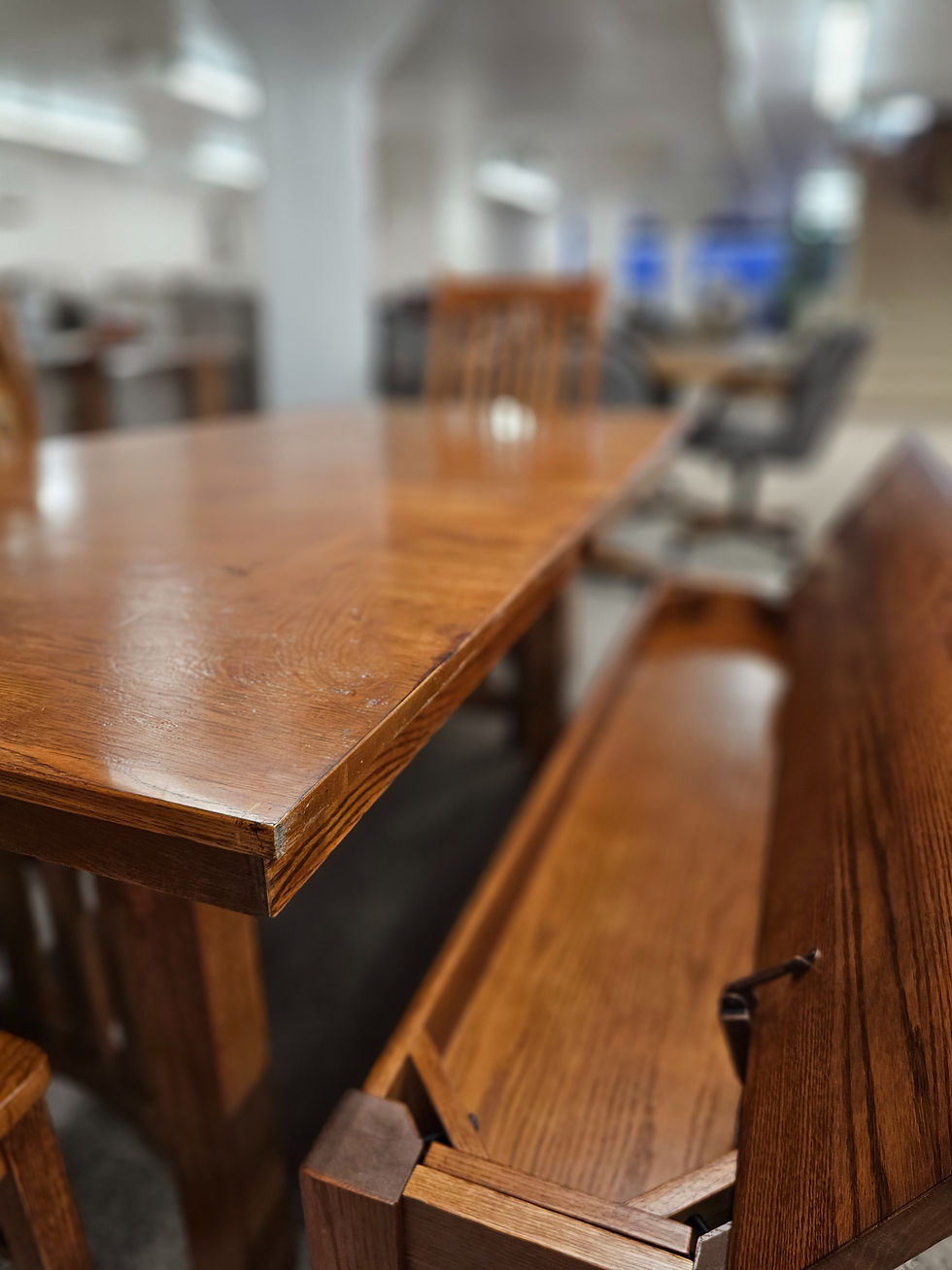
Why It's Hard to Judge Furniture Quality
Walk into almost any furniture store and the products are designed to impress at a glance. The finishes are clean, the proportions are pleasing, and the price tags are positioned to suggest value. What you can't easily see from five feet away is what's happening inside: the frame construction, the joinery, the density of the foam, the quality of the hardware.
Mass-market retailers have also spent decades training consumers to shop by style and price point, not by construction. As a result, most buyers don't know what questions to ask, let alone where to look.
The good news: quality furniture almost always reveals itself when you know where to look. It rewards a little hands-on inspection. And a well-made piece doesn't just feel different - it behaves differently in the store before you ever get it home.
The Frame Test

The frame is the skeleton of any upholstered piece, and it's where quality either lives or dies. You can reupholster a great frame indefinitely. You can't fix a bad one.
What to do: Lift one front leg of a sofa slightly off the floor and set it back down. Does the frame flex and creak, or does it hold solid? Grab two diagonal corners of the sofa and try to gently twist the frame. A well-built piece won't rack or wobble.
What to look for:
Kiln-dried hardwood is the gold standard. Kiln drying removes moisture and prevents warping, cracking, and joint failure over time. Ask the salespeople directly — if they don't know, that tells you something.
Avoid softwoods and composites. Frames built from pine, plywood, or particleboard are far more likely to crack or break under regular use.
Corner blocks are a good sign. These are triangular wooden braces glued and screwed into the inside corners of a frame, adding rigidity where the frame is most vulnerable.
If a piece feels light or hollow when you move it, that's worth paying attention to. Solid hardwood has weight to it. It should feel substantial.

Evaluating Joinery and Construction
This is where furniture that looks similar on the surface starts to diverge dramatically. The joints, the places where pieces of wood connect, are the weakest points in any piece of furniture. How they're built determines whether the piece lasts five years or fifty years.
The traditional standard is mortise-and-tenon joinery, where a precisely cut projection on one piece fits into a matching cavity on another. Done well, this creates a mechanical connection that gets stronger over time. Dowels and wooden corner blocks are also good signs when used properly.
What to watch for: Metal staples, cheap plastic brackets, and visible glue alone are warning signs. These are assembly-line shortcuts that save time in manufacturing and cost you durability at home.
As we covered in Why Natural Wood and Authentic Materials Are Back in a Big Way, traditional joinery methods were the standard for centuries, and they're why antique pieces are still structurally sound today. You can't build mortise-and-tenon joints into particleboard. Real joinery requires real wood.
For case goods — dressers, sideboards, cabinets — pull the drawers out completely and look at the corners. Dovetail joints (the interlocking fan-shaped teeth you see on quality drawers) indicate skilled craftsmanship. Stapled or glued butt joints indicate the opposite. Also check: does the drawer bottom sit in a groove, or is it stapled on? Grooved is better.
Cushion and Upholstery Quality Indicators
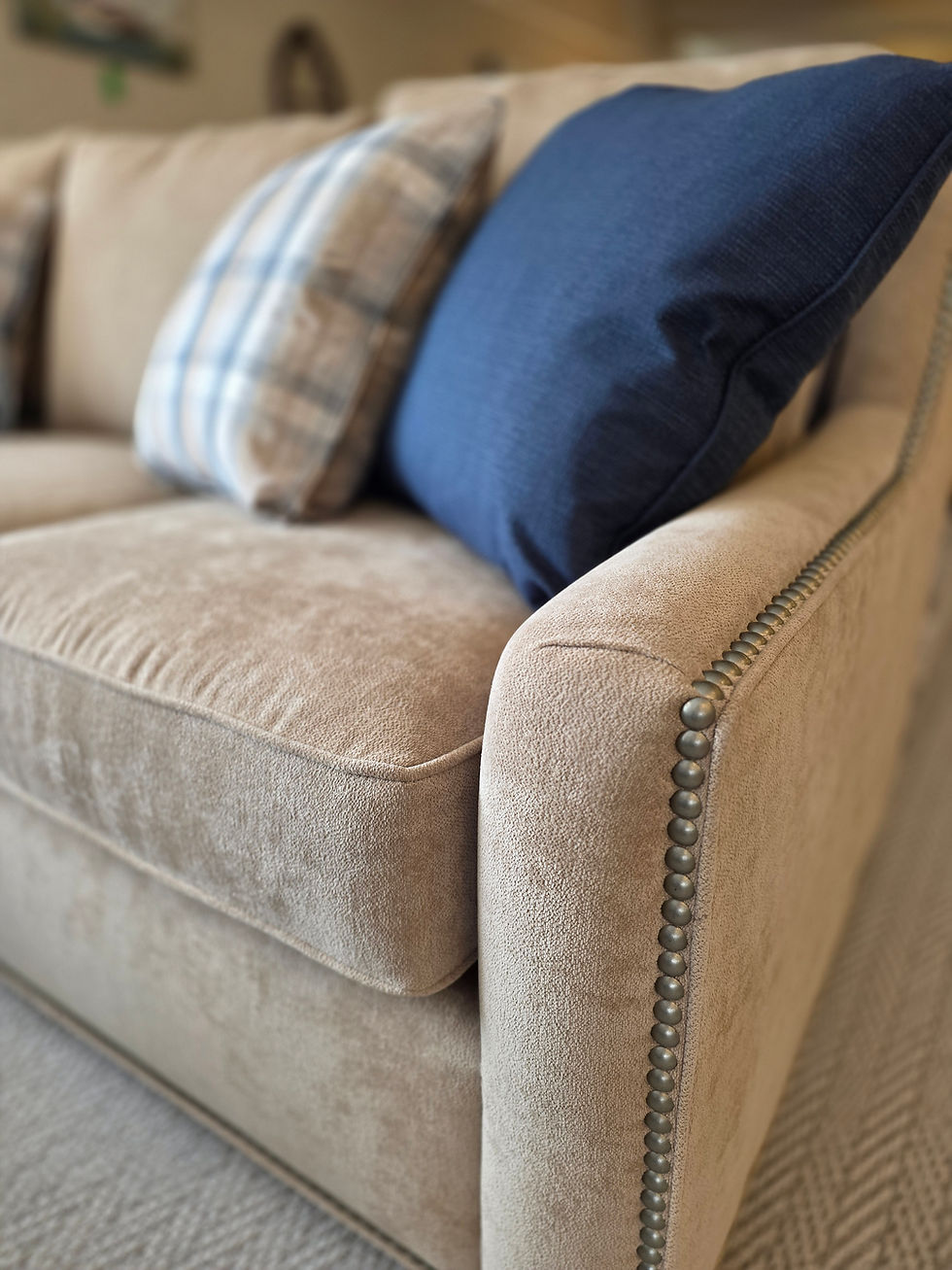
Once you're confident about the frame, turn your attention to what's on top of it. Cushion quality is one of the most direct predictors of long-term comfort.
Foam density is the key metric for seat cushions. Higher density foam holds its shape longer and resists compression. Lower density foam (common in entry-level furniture) starts to sag within a year or two of regular use. You can sometimes get a sense of density by pressing firmly on a cushion: cheap foam bottoms out quickly and springs back fast. Quality foam offers more resistance and recovers more slowly.
Look for cushions with down or down-blend wrapping around a foam core. This combination gives you support from the foam and a softer, more luxurious feel from the down, and it maintains its shape much better than pure down alone.
For upholstery fabric, run your hand across the surface and feel for consistency. Cheap fabric often has visible variation in weave density, or it pills when rubbed. Ask about the double-rub count, a measure of how well a fabric holds up to friction. Residential furniture should generally be 15,000 double-rubs or higher; heavy-use pieces should aim for 25,000+.
As we explored in Why Texture Matters More than Ever, the fabric choice does far more than set the color: it determines how a piece feels to live with every day. Performance fabrics that look and feel like natural textiles are a legitimate option now, particularly for Wisconsin families who need upholstery that can handle real life without looking like it's trying too hard to be practical.
Also inspect the seams. Quality upholstery has tight, even stitching with no loose threads or puckering. On tufted pieces, the buttons should be pulled evenly and the tufts should form clean, symmetrical diamonds.

Finish and Hardware Details
These details might seem minor, but they're often where well-made furniture announces itself most clearly.
For wood pieces, look at the finish closely. Run your hand across the surface. It should be smooth and even, with no rough patches, brush marks, or areas where the finish looks thin or uneven. Open any doors or drawers and look at the interior surfaces. Quality manufacturers finish the inside, not just the outside. Check the back panel: is it solid wood or a thin hardboard stapled on? The back is a common cost-cutting location.
Hardware is a useful proxy for overall quality. Open and close doors and drawers repeatedly. Quality hinges and drawer slides feel smooth and controlled, with no rattling or looseness. Soft-close mechanisms on cabinet doors and drawer slides are a positive sign, since they require better hardware and better installation to work correctly.
Leveling feet and adjustable glides are small details that indicate a manufacturer thinking about long-term use. They also say something about who they expect their customers to be: people keeping the piece for years, or those just using it for a season.
What Well-Made Furniture Feels Like in Person
All of these individual tests point to something you can also just feel when you sit down, run your hand along a surface, or open a drawer in a quality piece. There's a weight, a solidity, and a smoothness to well-made furniture that's hard to articulate but immediately recognizable.
This is one of the most important reasons to see and touch furniture in person before you buy. As we've said before in Why Texture Matters More than Ever, a fabric that looks perfect in a photo can feel scratchy or slippery in person. A sofa that photographs beautifully can feel flimsy when you actually sit on it. The tactile experience is irreplaceable.

Sit in it. Shift your weight. Move from one end to the other. Does the frame stay quiet, or does it creak and flex? Do the cushions support you evenly, or do you feel the frame underneath? Does the sofa feel like it's built to move with you, or like it's barely holding together?
A well-made piece invites you to use it. It feels settled and secure. And it tends to feel better, not worse, after a few years. Good leather softens and develops character. Solid wood settles and stabilizes. Quality fabrics wear gracefully rather than pilling and fading. That's the difference between furniture that ages and furniture that deteriorates.
What to Look for at Werner Harmsen
Our showroom is intentionally set up so you can do exactly what this post describes. We encourage people to lift cushions, open drawers, and sit in things for longer than feels polite. That's how furniture is supposed to be evaluated.
Our design team knows the construction details on every piece we carry: which brands use kiln-dried hardwood frames, which upholsterers still hand-tie springs, which drawer systems are built to last. If you want to know the foam density on a specific sofa or the joinery method on a dining table, we can tell you. And if we can't, we'll find out.

We also have an in-house carpenter, Josh, whose custom work uses traditional joinery methods, the same techniques that made your grandparents' furniture worth passing down. If you want a piece built to a specific size, wood species, or finish, that's a conversation worth having.
The goal, whether you're shopping our floor or working through this checklist somewhere else, is to buy once. Choose pieces you'll stop worrying about , ones you'll choose to reupholster in fifteen years rather than replace in five.
Ready to see quality up close?
Come into Werner Harmsen and put these tests to work. Our design team is here to walk you through the construction details, help you understand what you're investing in, and make sure the pieces you bring home are built to last. Schedule a consultation today, or just stop in and start pulling out some drawers.
Which of these quality "red flags" do you wish you'd known about before your last furniture purchase?
The Frame Test (lifting a leg to check for flex)
Checking for dovetail joints in drawers
Foam density vs. softness
Kiln-dried hardwood vs. composites
You can vote for more than one answer.


Comments