
Why Quality Furniture Is an Investment, Not an Expense

Most furniture conversations start with price. You see a sofa listed at three thousand dollars and another listed at nine hundred, and the first question is "Why does this one cost so much more?" That is not a bad question. It is just the wrong starting place. The real question is not "Why does this cost more?" The real question is "What will this cost me over twenty years?"
When you buy furniture, you make a transaction. When you invest in furniture, you make a decision about how your home will function, how your family will gather, and what your daily life will feel like for the next decade or two.
These are not the same thing, and treating them the same way is why so many people end up replacing furniture every five years instead of keeping pieces that actually work.
What Quality Actually Means
Quality in furniture is not about aesthetics or brand name. Quality is about materials, construction methods, and repairability. A quality piece of furniture is made from solid wood or high-grade engineered materials that hold their structure over decades. It uses eight-way hand-tied springs instead of sinuous wire springs or no springs at all. It has real leather or natural textiles instead of vinyl or polyester blends. These choices cost more money upfront because they cost more money to source and assemble.
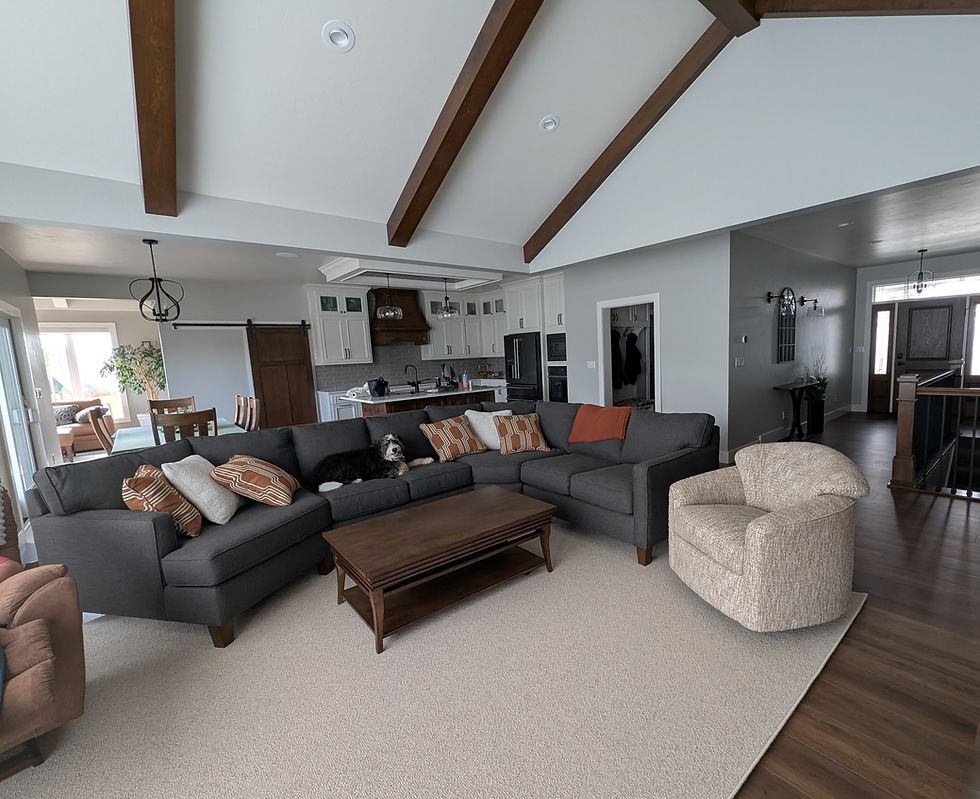
But here is what matters: quality materials improve with age rather than deteriorate. A solid wood frame stays solid. Real leather develops character and patina. Natural linen and wool fibers actually get softer over time. Polyester cracks and peels. Vinyl breaks down. Cheap foam becomes flat and unusable. These are not subtle differences. They are the difference between a sofa you will sit on comfortably in year fifteen and a sofa you will be replacing in year five.
The Mathematics of Investment
Let's talk actual money. A budget sofa costs nine hundred dollars. A quality sofa costs three thousand dollars. The difference is twenty-one hundred dollars. Now imagine you keep the quality sofa for twenty years. That means you paid one hundred and fifty dollars per year to have comfortable seating in your home. Compare that to the budget sofa. If it fails in five years, you need a new one. If it fails in seven years, you need a new one. Most budget furniture lasts somewhere between five and ten years before the cushions sag so much they are unusable, the fabric frays, or the frame starts to wobble.
Now calculate the real cost. If you buy a nine-hundred-dollar sofa every five years for twenty years, you have spent three thousand six hundred dollars. You have purchased four sofas and disposed of three of them. You have spent time shopping, measuring, coordinating, and replacing.
Meanwhile, the person who bought the quality three-thousand-dollar sofa has one piece that still works beautifully and paid less per year for the privilege.
This math changes dramatically when you extend the timeline to thirty or forty years, which is absolutely realistic for quality furniture. A sofa purchased in 2000 that is still functioning beautifully in 2040 is a better investment than five different cheap sofas purchased, used, and discarded over the same period.
Quality Improves With Age
This is the part that separates investment from expense. Budget furniture gets worse as time passes. The foam breaks down. The fabric pills and frays. The frame starts to feel unstable. Quality furniture literally gets better with age. Real leather develops a patina that is more beautiful than when it was new. Solid wood can be refinished and will look exactly as good as the day it was made. Natural textiles become softer. Springs that are properly made will maintain their support for decades.
This is not sentimentality. This is durability. A quality sofa that has hosted family gatherings for fifteen years looks better and feels better than it did at ten years because its materials are designed to respond positively to use and age. A budget sofa that is ten years old looks worn out because it is falling apart.

The "Investment" Mindset Shift
Here is where the real change needs to happen. You are not buying a sofa. You are not even buying furniture. You are buying twenty years of comfort for your family. You are buying the understanding that your dining table will be the place where you have conversations that matter. You are buying the knowledge that your sofa is solid enough to hold your weight and your partner's weight and eventually your grandchildren's weight when they visit. You are making a choice to invest in your home rather than constantly patch it with cheap alternatives.
Investment thinking sounds like this: "I am going to spend three thousand dollars now on a quality sofa that will serve my family well for the next two decades." It does not sound like: "I found a sofa on sale for six hundred dollars that I can buy now and replace in five years."
When you shift your thinking from expense to investment, you start asking different questions. Instead of "Can I afford this?" you ask "Can I afford not to?" Instead of "How much will this cost?" you ask "How long will this last?" Instead of "What is the cheapest option?" you ask "What will make my home feel good for the longest time?"
Building Your Furniture Investment Plan
You do not have to invest in everything at once. Most people cannot afford to replace their entire home with quality pieces simultaneously. Smart investment happens gradually. You identify the pieces you use every single day. Your sofa, because you sit on it multiple times daily. Your bed, because you spend eight hours on it nightly. Your dining table, because it is where your family gathers. You start with those pieces and invest in quality. You keep your budget pieces for secondary spaces—the guest room, the occasional-use furniture, the pieces that do not carry the weight of daily use.
As time goes on and you have budget for more investment, you replace the secondary pieces with quality. The guest room gets a quality bed. The den gets a quality sectional. Over ten years, your home transitions from a mix of budget and quality to primarily quality pieces, and your cost per year of use drops significantly.
Your October Opportunity
During our October anniversary event, we are offering twenty percent off everything—both in-stock and special order furniture. We are also offering a one-hundred-fifty-dollar trade-in credit for trading in old furniture, which means you can transition to quality without necessarily paying the full investment price upfront. And we are offering one hundred trips as an incentive, which is our way of saying thank you for choosing investment over expense.
October is the moment to think bigger about your space and make the investment decisions you have been considering. Whether you have been thinking about upgrading your sofa for two years or you just realized your dining table needs to be replaced, October is when quality becomes accessible. This is not a desperation discount. This is strategic pricing for a strategic moment.
Start Your Investment Plan Today
The best time to invest in quality furniture was twenty years ago when the first quality pieces would still be serving you beautifully. The second best time is today. Quality furniture is not about having more money. It is about understanding what money actually buys you when you spend it on investment versus expense. It is about asking yourself whether you want to replace your furniture every five years or keep it for the next twenty.
We can help you invest in furniture that matches your budget and your home. Come talk to us about which pieces deserve investment and which can wait, and how to build a home that will serve your family well for decades to come.


Comments