
Blending Heritage-Style Pieces with Today's Homes


There's a dresser in your spare bedroom that belonged to your grandmother. Or
maybe there is a dining table your parents received as a wedding gift that’s hidden in the attic. Or, there’s a rocking chair that's been in the family for three generations that sits downstairs in the basement. These pieces have stories, weight, and a kind of permanence that modern furniture just doesn't have, but they don't quite fit with the rest of your home. They feel formal, outdated, or just out of place next to your contemporary sofa and sleek lighting. So they sit, loved but unused.
It's a common dilemma, especially here in Wisconsin where families tend to stay put and pass things down. We value heritage and history, but we also live in a world that looks and functions differently than it did fifty or seventy-five years ago. The good news is that you don't have to choose between honoring the past and living comfortably in the present. With a little thoughtfulness, heritage pieces can become the most interesting and meaningful parts of your home.
This isn't about creating a museum or making your living room look like your great-grandmother's parlor. It's about blending old and new in a way that feels intentional, comfortable, and authentically you.
Why Heritage Pieces Are Worth Keeping

Let's start with the obvious: heritage furniture is almost always made better than anything you can buy new today. That dresser from your grandmother is probably solid wood with dovetail joinery and a finish that's held up for decades. The dining table your parents got as newlyweds is likely heavier, sturdier, and more repairable than a modern equivalent at three times the price.
Beyond the quality, these pieces have something money can't buy: history. Every scratch, every worn spot on the finish tells a story. That dining table has hosted holiday meals, homework sessions, and late-night conversations. The rocking chair soothed babies to sleep, maybe even you! When you keep and use these pieces, you're keeping those stories alive. You're connecting your home to the people who came before you in a way that's tangible and persistent.
And from a design standpoint, heritage pieces add a layer of depth and authenticity that you just can't replicate with new furniture. A room full of matching, recently purchased pieces can feel staged, like a showroom. Mix in something with age and patina, and suddenly the space feels collected over time, like a home that's been lived in and loved.
That said, not every old piece deserves a place in your home. If something is poorly made, damaged beyond repair, or genuinely doesn't serve a purpose, it's okay to let it go. The goal isn't to keep everything out of obligation. It's to identify the pieces that are worth preserving and figure out how to make them work in your life today.
Styling Heirloom Furniture Without the Museum Feel
The trick to making heritage furniture feel current is to avoid creating a period
room. If you surround your grandmother's Victorian sideboard with other Victorian pieces, lace doilies, and formal drapery, you've created a time capsule, not a living space. Instead, pair that sideboard with contemporary elements, like a modern abstract painting on the wall above it, or a sleek table lamp or a simple vase with fresh greenery on it. The contrast makes both the old and the new more interesting.

The same principle applies to seating. An antique dining table can feel fresh and current when paired with modern chairs, maybe sleek metal ones, or upholstered chairs in a contemporary fabric. Conversely, a traditional upholstered armchair can anchor a living room filled with clean-lined modern furniture. The mix creates balance and keeps the room from feeling too precious or too cold.

Lighting is another easy way to update the feel of heritage furniture. That heavy wood dresser from the 1940s? Put a minimalist table lamp on top instead of a fussy, ornate one. Use modern sconces or pendant lights nearby. The updated lighting signals that this is a current, lived-in space, not a re-creation of the past.
And don't be afraid to repurpose pieces. An old wooden trunk can become a coffee table. A vintage dresser works beautifully as a TV stand or a bathroom vanity. A farmhouse table that's too big for your dining room might be perfect as a desk or a kitchen island. When you give heritage furniture a new function, it stops feeling like an artifact and starts feeling useful again.
The key is intentionality. Each heritage piece should have a reason for being in the room: because it's beautiful, functional, meaningful, or all three. If you're keeping something purely out of guilt, it's going to feel awkward no matter how you style it.
Mixing Vintage and Contemporary

Blending vintage and contemporary furniture is as much about proportion and scale as it is about style. A massive oak armoire from the early 1900s can overwhelm a small room filled with delicate modern pieces. But put that same armoire in a spacious bedroom with a low-profile platform bed and simple nightstands, and it becomes a dramatic focal point.
Similarly, a small, delicate vintage side table might get lost in a room full of oversized contemporary furniture. The solution isn't to get rid of the piece: it's to find the right spot for it. Maybe it works better in a cozy reading nook or as a nightstand in a bedroom, rather than in the middle of a large living room.
Color is another important consideration. If your heritage pieces are dark wood like walnut, mahogany, or cherry, balance them with lighter contemporary furniture and walls. Too much dark wood in one space can feel heavy and closed-in, especially during a Wisconsin winter when natural light is already limited. On the other hand, if your vintage pieces are lighter, like oak, maple, or pine, you have more freedom to introduce darker or bolder contemporary elements.
Textiles are your secret weapon for tying vintage and contemporary pieces

together. A modern throw pillow on a vintage armchair, a contemporary area rug under an antique dining table, or linen curtains framing a window next to a traditional dresser are soft elements that bridge the gap between old and new. They're also easy to swap out if the balance doesn't feel quite right.
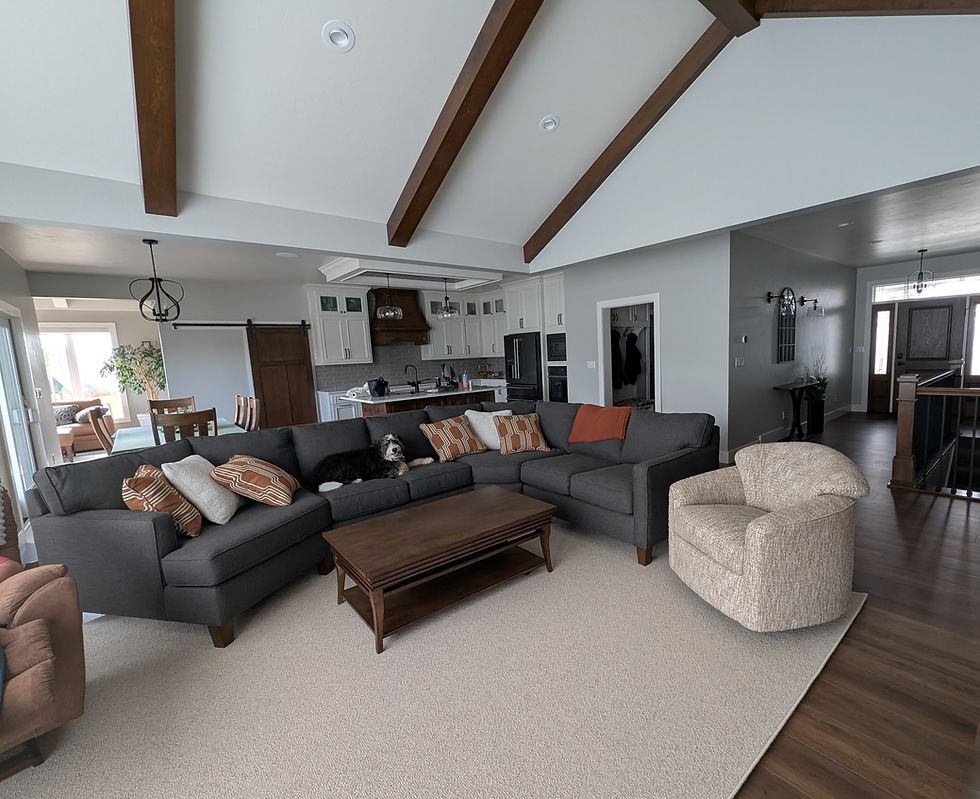
And remember: you don't need to fill every room with a perfect 50/50 split of vintage and contemporary. Some rooms can lean more heavily toward heritage pieces, while others can be mostly modern with just one or two vintage accents. The overall effect across your home should feel cohesive, but individual rooms can have their own personalities.
Creating Meaning Through Design
At the end of the day, blending heritage pieces into your home isn't just about aesthetics or making things match. It's about creating a space that reflects who you are and where you come from. A home filled entirely with new furniture can feel anonymous, like it could belong to anyone. But when you layer in pieces with history—furniture that was loved by the people who shaped your life, your home starts to tell a story.

That doesn't mean every room needs to be a shrine to the past. It just means being intentional about what you keep and how you use it. Maybe it's your grandmother's rocking chair in the nursery, rocking your own child to sleep the way she rocked you. Maybe it's your parents' dining table, refinished and surrounded by new chairs, hosting your family's holiday meals now. Maybe it's a single piece that sits quietly in a corner but reminds you of someone every time you see it.
These connections matter. They ground you. In a world where so much is disposable and replaceable, keeping and using furniture that has history is a small act of resistance. It's a reminder that quality lasts, that stories matter, and that the best homes are the ones that honor the past while making room for the future.
Here in Wisconsin, where family and continuity mean something, blending heritage and contemporary furniture feels natural. We're practical people: we want homes that work for how we live now. But we're also people who value where we come from. The furniture that bridges those two things isn't just decoration. It's a connection to the people and places that made us who we are.

Blending heritage pieces with contemporary furniture doesn't require a design
degree or a big budget. It requires thoughtfulness, a willingness to experiment, and a recognition that the best homes are the ones that feel collected over time. Start with one piece - the one that means the most or the one that's the most beautiful. Find the right spot for it, surround it with furniture that complements rather than competes, and see how it changes the feel of the room.
You might be surprised at how well old and new can coexist. And you might find that the furniture with history becomes the furniture you love most, not despite its age, but because of it.
Need help integrating heritage pieces into your home?
Building a home that honors your history while embracing the present is a journey, and you don’t have to navigate it alone. At Werner Harmsen, our design team specializes in helping you find the perfect balance between the old and the new. Whether you’re looking for a contemporary statement piece to refresh your grandmother’s heirloom dresser or need expert advice on how to arrange your existing heritage pieces within a modern layout, we are here to guide you. Visit us to explore our collection and schedule a consultation with our designers to create a space that is as functional as it is meaningful.


Comments